ptza@civil.auth.gr
THE CONCEPT OF TIME IN ORIGEN
PhD. Thesis – University of Glasgow, 1983–1987
Against all false accounts, both ancient and modern, this dissertation introduced for the first time the argument that Origen was an anti-Platonist in many respects and that he was the Greek illustrious philosopher and exegete of Plato, who turned a Christian anti-Platonist and ushered to the Creed of Nicaea. All allegations that Origen maintained doctrines such as ‘beginningless creation’, ‘pre-existence of souls’ [or of ‘intellects’], ‘transmigration of souls’, the Son being a ‘creature’, et cetera, have at last been demolished. Much later, a few scholars followed on my rebuttal of the notion of ‘pre-existence of souls’ allegedly maintained by Origen.
Besides, against all claims that Origen lacked an Eschatology and did not care for History, his Eschatology and Philosophy of History are expounded in detail.
This is the groundwork for the three books that followed: The Concept of Time in Origen, Peter Lang, 1991 (the thesis itself published); Origen: Cosmology and Ontology of Time (Brill, 2006); Origen, Philosophy of History and Eschatology (Brill, 2007).
 THE CONCEPT OF TIME IN ORIGEN
PETER LANG, 1991
New York, Bern • Berlin • Brussels • Vienna • Oxford • Warsaw
pp. xv + 606
This is publication of my PhD. Thesis – University of Glasgow, 1983–1987
(repr. 2026)
Visit the official website of this book
https://www.peterlang.com/document/1736365
 ORIGEN: COSMOLOGY AND ONTOLOGY OF TIME
SUPPLEMENTS TO VIGILIAE CHRISTIANAE
vol. 77
BRILL, 2006
This book reiterates and elaborates on Chapters 1-4 of my 1983-1987 doctoral thesis
Visit the official website of this book
https://brill.com/display/title/12088
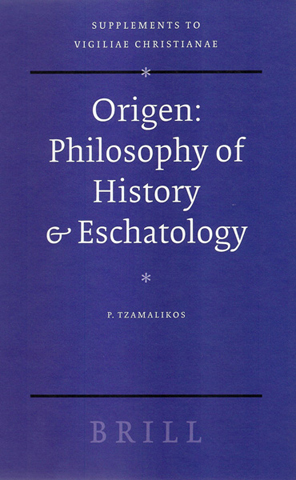 ORIGEN: PHILOSOPHY OF HISTORY & ESCHATOLOGY
SUPPLEMENTS TO VIGILIAE CHRISTIANAE
vol. 85
BRILL, 2007
This book reiterates and elaborates on Chapter 5 of my 1983-1987 doctoral thesis. Two chapters have been added, retailing my Thesis. They comprise PART IV: Philosophy of History Resolved - A myth reconsidered: Chapter 10, pp. 357–380; "History Without a Body?". Chapter 11, pp. 381–434: "Is History a Parable?".
Several uninformed theologians (being in the dark, as they are on several other pertinent issues, too - let alone philosophy in general) reference the analyses of this book as if they first appeared in 2007. They usually claim that I followed Mark Edwards’ 2002-book, which I never cited therein, and could not have cited during those earlier years, when Edwards’ book had not yet been written. In reality, however, my exposition harks back to my 1983-1987 Thesis, and its 1991-publication. And yet, this nescience persists, in the teeth of Mark Edwards himself having set the record straight a million times on that score.
Visit the official website of this book
https://brill.com/display/title/12557

A NEWLY DISCOVERED GREEK FATHER
Cassian the Sabaite
eclipsed by ‘John Cassian’ of Marseilles
A critical edition of an ancient manuscript
with commentary and an English translation
from Codex 573, of the Meteora monastery of Metamorphosis (the Great Meteoron)
SUPPLEMENTS TO VIGILIAE CHRISTIANAE
vol. 111
BRILL, 2012
Visit the official website of this book
https://brill.com/display/title/21281

THE REAL CASSIAN REVISITED
Monastic Life, Greek Paideia,
and Origenism in the Sixth Century
A critical study of an ancient manuscript
SUPPLEMENTS TO VIGILIAE CHRISTIANAE
vol. 112
BRILL, 2012
Visit the official website of this book
https://brill.com/display/title/17337?language=en

AN ANCIENT COMMENTARY ON THE BOOK OF REVELATION
A critical edition of the Scholia in Apocalypsin
with commentary and English translation
from Codex 573, of the Meteora monastery of Metamorphosis (the Great Meteoron)
Cambridge University Press, 2013
Visit the official website of this book
This book, written by the newly discovered Greek father Cassian the Sabaite (c. 470 - 20 July, 548 – an acclaimed scholar, the fourth abbot of the Laura of Sabas in Palestine after St Sabas, and a spiritual child of St Sabas himself, alongside my two 2012-books, caused panic-stricken delirium to certain Catholic theologians, monks, priests, and the like, prompting frantic and preposterous reviews in a desperate attempt to rescue the mirage called ‘John Cassian of Marseilles’.
Cassian’s Greek texts always indicate as their author ‘Cassian’, never ‘John Cassian’, which is a name entirely unknown to any Greek theologian, or to any Greek source whatsoever.
No Greek-writing theologian or historian or chronicler, or whatever, did ever know of, or mentioned, 'John Cassian of Scythia'. Instead, they knew of Abba Cassian of Scythopolis (ἀββᾶν Κασιανὸν Σκυθοπολίτην ὄντα τῷ γένει).
Cyril of Scythopolis exalted not only Abba Cassian the Sabaite's orthodoxy and pious conduct, but also his erudition (τὸν νῦν ἡγούμενον ἀββᾶν Κασιανὸν Σκυθοπολίτην ὄντα τῷ γένει ὀρθόδοξόν τε ὄντα καὶ βίῳ καὶ λόγῳ κεκοσμημένον), which squares with the report that Abba Cassian the Sabaite was a proficient theologian, who took part in the Council of 536, as a delegate (a priest at the time) of the Laura of Sabas and a signatory to several documents of the minutes of the synod.
And, in the tenth century, Symeon Metaphrastes mentioned Abba Cassian of Scythopolis and reiterated his renown as a man who 'was adorned with orthodox faith, piousness, and erudition (Κασσιανόν, τὸ γένος Σκυθοπολίτην, τὸ σέβας πιστότατον, ἀρετῇ καὶ λόγῳ σύντροφον).
Cassian was a native of Scythopolis (today’s Beit She'an or Beisan or Beth-shean, a city in the Northern District of Israel), who had never anything to do with Marseilles, the once-Greek colony in France. He lived all his life in the East, mainly in Palestine, and visited monastic communities in Egypt, where monks were eager to hear his hortatory instruction, stories from monastic experience, and guidelines concerning organisation of monastic life, as the Apophthegmata Patrum relate as some points.
So is abba Cassian mentioned in the Constitution of the Monastery of Πρόδρομος Φοβερός [The Dreadful Prodromus], in Euxinus Pontus (Black Sea), which styles him ‘the great Cassian’ (τὸν μέγαν Κασσιανόν).
Even in the fourteenth century, Isaac Argyrus (Byzantine astronomer, mathematician, geometrician, theologian, monk, author, the most important student and interpreter of Ptolemy’s astronomy;Constantinople, c. 1300 / 1312 – c. 1375, a pupil of Nikephorus Gregoras), citing the 'Synaxarium of sayings and instructions of the God-inspired holy fathers', entitled Evergetinon (so called from its compiler, Paul Evergetinos (an eleventh-century scholar / monk at the Monastery of Theotokos Evergetis [= Benefactor], in Constantinople), relates how ‘the saint Cassian’ (ὁ ἅγιος Κασσιανός) was asked to provide additional information about Abba Serenus’ struggle with daemons, which Cassian actually did, whereby he elaborated on the topic of ‘four ways towards participating in God’ (Περὶ διακρίσεως μετοχῆς Θεοῦ ἐν τέσσαρσι τρόποις).
Whether in reference to his famous works, or in context of different instances, he was always mention and cited 'Cassian' (as in the Greek manuscript of Meteora Codex 573, that I edited and published in 2012), who lived and taught and wrote in the East, and spoke excellent Greek.
No author did ever think of calling Cassian 'John' Cassian, let alone fancifully report that he allegedly wrote in Latin. The chimerical ‘John Cassian’, a synthetic product, launched as a Latin-speaking native of Scythia Minor (now Dobruja, a region today shared by Romania and Bulgaria) is a fabrication that came much later.
Cassian the Sabaite's texts from ancient codices are nowpresented, edited, translated in English, and exhaustively perused in three books of mine (2012, 2012, 2013), taking into account historical, philosophical, theological context. They reveal a profoundly erudite Greek author, employing highly refined and extremely rare Greek idiomatic expressions that in some cases had been used by a small handful of Greek philosophers of the highest order. And yet two or three religious zealots desperately strove either to turn a blind eye on those illuminating analyses (assuming they were able to read them in the first place), and viscerally rushed into asserting that these manifestly Greek originals are but Greek translations from Latin texts.
Consequently, the allegation goes that highly nuanced terms, expressions, and analyses, conspicuously loaded with an inveterate Hellenic philosophical patrimony, are but translations from artless Latin texts written by a figment called 'John Cassian of Marseilles', in which texts the aroma of the glorious Hellenic tradition has been completely lost in the translation.
The brazenly obvious inability to read (never mind study) Cassian the Sabaite's highly weighty philosophical terms, expressions, and analyses, turned into frivolously brushing those off – which means that religious allegiances took the better of that desperate criticism, and consequently there was nothing remotely like scholarship in the panic stations.
Thus, they frantically dismissed the acclaimed Abbot Cassian the Sabaite altogether, while dreading (or mourning) the prospect of 'eighty years of scholarship on John Cassian' turning to a demolished house of cards.
But I have left the ravings of fanatics to their own devises.
And while despising conversation with bigotry, and abiding by unbiased non-partisan scholarship only, I wrote the Appendix II: “Cassian who? On Attempts to Rescue the invented Figment 'John Cassian of Marseilles'" (available below), in my Origen and Hellenism, pp. 475–496. This demonstrably kept at bay any sort of religious partisanship (to which I have always been utterly indifferent) or any hue of chauvinism (as a consternated critic alleged), with which I have never had anything to do, anyway.
For I am myself too a Hellene to be a chauvinist – and let discomposed bigotry remain in its dire straits.
The problem perennially remains the same: fanatics of questionable acumen, posing as 'scholars', presume to make assertions on texts of Greek literature, both philosophical and patristic (especially ones loaded with highly nuanced philosophical connotations and numerous stupendously telling idiomatic Greek expressions meaningfully pregnant with precious information and speaking to brilliant moments of the Greek philosophical tradition), while they themselves refuse to learn Greek.
It is like presuming to pose as a ‘Dante-scholar’ while refusing to learn the Italian language and its roots, or posturing as ‘Shakespeare-scholar’ while shunning engagement with the English language, of which the Great Bard revealed the potential, beauty, and prolificacy, and built upon it.
ANAXAGORAS, ORIGEN, AND NEOPLATONISM
The Legacy of Anaxagoras to Classical and Late Antiquity
2 volumes
pp. xxviii + 1794
De Gruyter
Berlin / New York, 2016
 vol. I
(pp. xxviii + 1 ÷ 823)
 vol. II
pp. (xix + 825 ÷ 1778)
Origen caveated that his doctrine of the soul had nothing to to with that of Plato’s, and that his own ‘theory’ was ‘more sublime’ (ὑψηλοτέρα θεωρία – Contra Celsum, IV.19). However, both ancient and modern unschooled theologians, unable as they have always been to make out what this ‘more sublime theory’ was about, are locked up in the folly that Origen maintained ‘a pre-existent world of souls’ and a 'beginningless creation'.
Having already rebutted these allegations since 1983-1987, in my Doctoral Thesis (published in 1991), this book explains what this ‘more sublime theory’ was about, namely, that this was Origen’s Anaxagorean Theory of Logoi, which I expound at length and discuss in its proper context within the Greek philosophical ambiance.
Theologians, unable as they always are to follow Origen's enormous philosophical background, and consequently intransigent opposite elaborate arguments for that matter (which are way unable to assess, and, more often than not, even to read) obstreperously are stuck to the folly about ‘a pre-existent world of souls’, and the like.
By now, only a few philosophers, and far fewer theologians, have begun to grasp what Origen's Theory of Logoi actually is about.
Visit the official website of this book
https://www.degruyter.com/document/doi/10.1515/9783110420104/html
ORIGEN: NEW FRAGMENTS FROM THE COMMENTARY ON MATTHEW
Codices Sabaiticus 232 & Holy Cross 104, Jerusalem
pp. cxcv + 686
Ferdinand Schöningh (Paderborn, Germany / Boston, USA), 2020
Visit the official website of this book
https://brill.com/display/title/56573
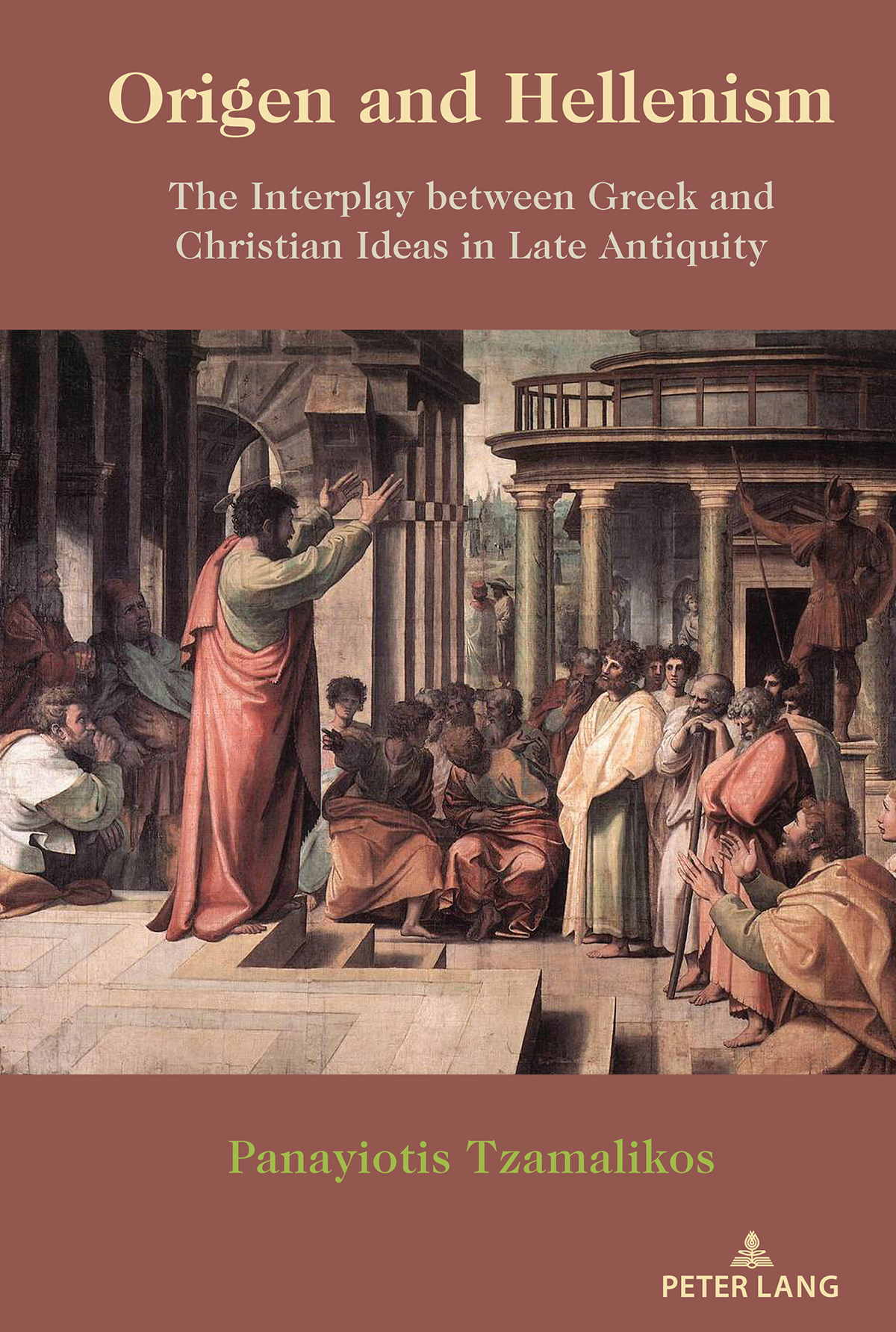
ORIGEN AND HELLENISM
The Interplay between Greek and Christian Ideas in Late Antiquity
pp. xxiv + 569
Peter Lang, New York,
Bern • Berlin • Brussels • Vienna • Oxford • Warsaw
2022
Visit the official website of this book
https://www.peterlang.com/document/1062337
APPENDIX II
TO
ORIGEN AND HELLENISM
pp. 475-496
“Cassian Who? On Attempts to Rescue the invented figment 'John Cassian of Marseilles'
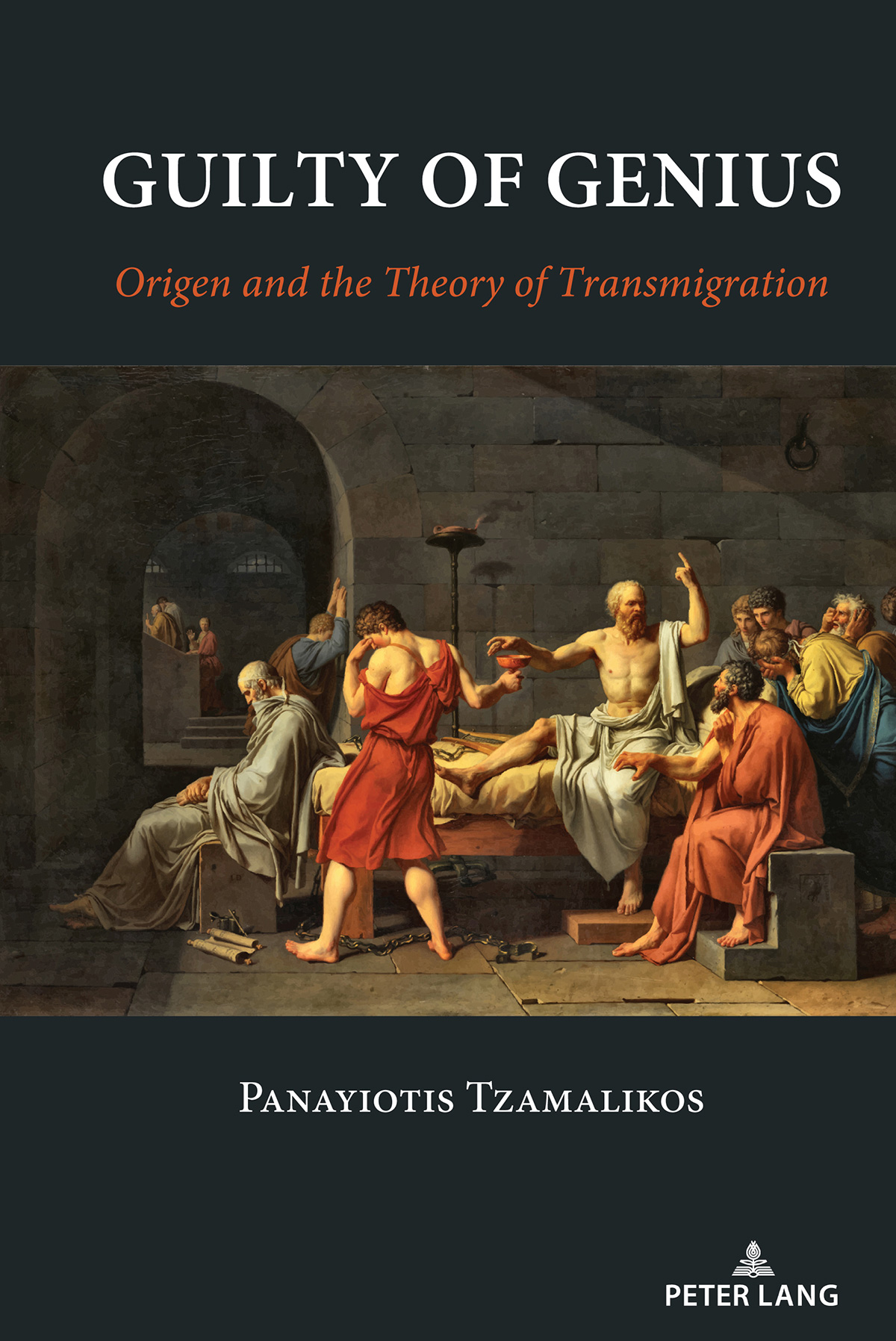
GUILTY OF GENIUS
Origen and the Theory of Transmigration
pp. xxvii + 454
Peter Lang, New York,
Bern • Berlin • Brussels • Vienna • Oxford • Warsaw
2022
Visit the official website of this book
https://www.peterlang.com/document/1140676
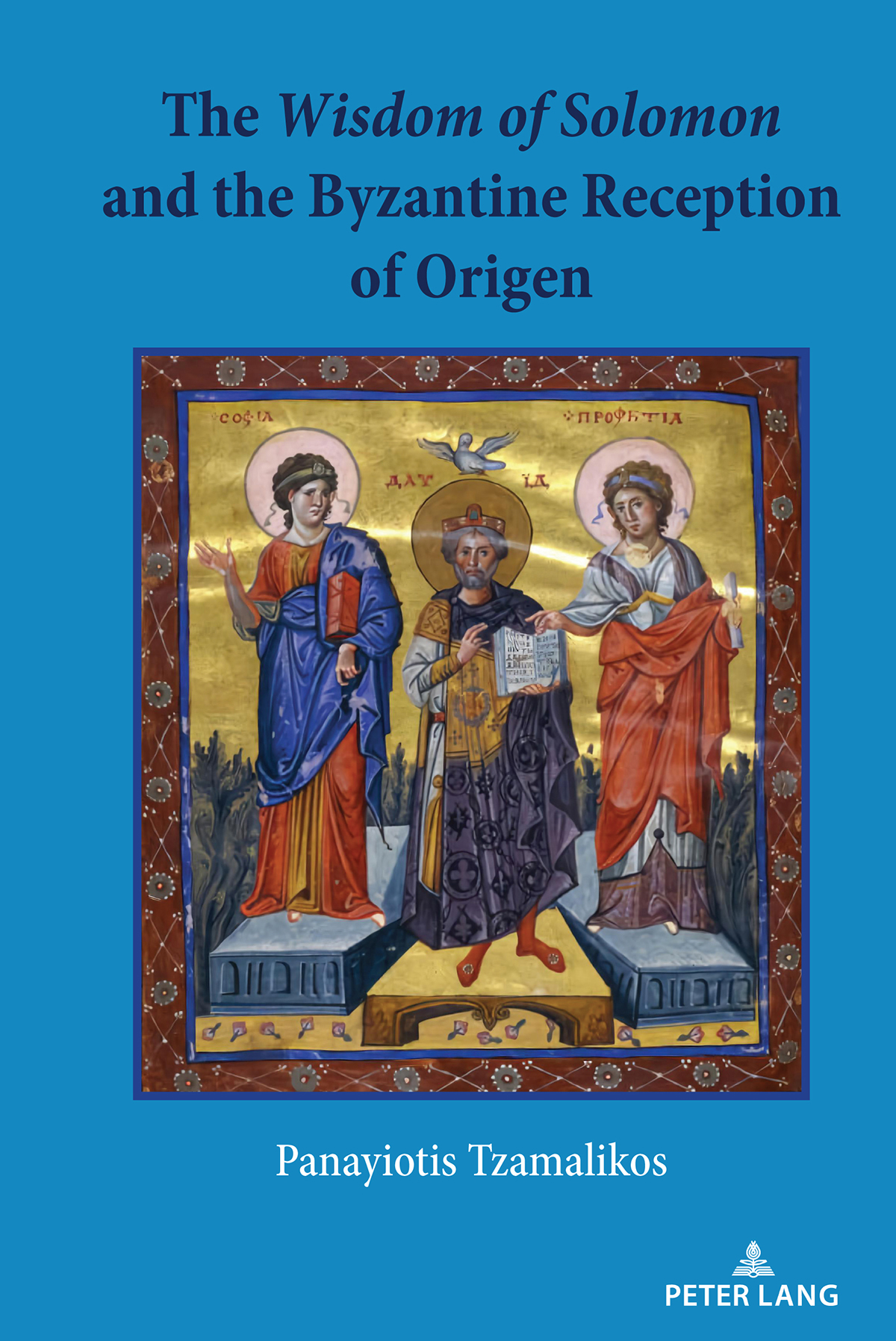
THE WISDOM OF SOLOMON AND THE BYZANTINE RECEPTION OF ORIGEN
pp. xvi+720
Peter Lang, New York,
https://www.peterlang.com/document/1267466
This volume offers a critical edition, with English translation and extensive annotation, of a previously unknown Greek manuscript.
The authorof the manuscript writes in header, “Ἑρμηνεία τῆς Σοφίας τοῦ Σολομῶντος, ὥς φασιν, παρὰ τοῦ ’Ὠριγένους ἑρμηνευθεῖσα (‘Exegesis of the Wisdom of Solomon, which, as they say, has been interpreted by Origen’).”
However, it turned out that this text is not actually Origen’s. It was written by the immensely erudite Byzantine Greek astronomer, historian, and theologian Nikephorus Gregoras (c. 1295 – 1360), who used Origen’s name for specific reasons explained in this edition. It is neverthelessarguably demonstrated that Nikephorus Gregoras availed himself of Origen's own Commentary on the Wisdom of Solomon.

DAEMONS IN HELLENIC AND CHRISTIAN ANTIQUITY
Porphyry’s Discipleship with Origen
Peter Lang, 2025
New York - Berlin - Bruxelles - Chennai - Lausanne – Oxford
pp. xxii + 790
Visit the official website of this book
https://www.peterlang.com/document/1336022
Books and Articles in Greek appear in the Greek edition of this site